

Optimize Your Stride Efficiency
Sommaire

Continuous feedback, the missing key to perfecting running technique?
Real-Time Feedback Revolution: How ENGO Smart Eyewear Transforms Running Mechanics
In the pursuit of peak performance, every millisecond and millimeter counts. Stride efficiency—that elusive combination of optimal cadence, foot strike, and energy conservation—has traditionally been one of the hardest aspects of running to perfect. Until now.
The Mechanics of Efficient Running
Before diving into ENGO's game-changing approach, let's understand what constitutes an efficient stride. Elite runners typically maintain:
- A cadence between 170-190 steps per minute
- Minimal vertical oscillation (1.5-2.5 inches)
- A slight forward lean from the ankles
- A foot strike that lands close to the body's center of mass
- Low ground contact time (≈200 milliseconds)
The challenge? Measuring and adjusting these variables in real-time has been virtually impossible—until ENGO's heads-up display technology.
Instant Biomechanical Feedback
With ENGO, athletes can adjust their stride mechanics while simultaneously receiving instant feedback on performance metrics. This closed feedback loop revolutionizes technique work.
The Neurological Connection
From a physiological perspective, this immediate feedback triggers what scientists call "neuromuscular recruitment patterns"—essentially, your brain learns efficient movement patterns faster through instant reinforcement. Research shows that visual feedback can improve motor learning by up to 42% compared to delayed feedback.
Marathon runner Justin Fiske (2:28 PR) explains: "I've been incorporating ENGO 2 for the past 2 years now to keep me on pace in my hardest tempo, threshold, speed, and goal marathon pace long runs." This real-time data allows Justin to fine-tune his biomechanics while maintaining his target intensity.
Practical Application: The Stride Efficiency Loop
Here's how ENGO creates what exercise physiologists call a "continuous improvement feedback loop":
- Observe current performance - View your running power, pace, and heart rate
- Make technical adjustments - Modify stride length, foot strike, or arm carriage
- Assess impact immediately - See how changes affect your metrics
- Refine and repeat - Continue optimizing based on real data
Olympic speed skater Peter Michael explains his approach: "When you're struggling to keep pushing, seeing your speed and vitals through the lens helps you maintain your pace and keep digging deep. There's no need to look at your watch; just focus and push forward."
Elite Results from Optimized Biomechanics
Troy Woolfolk, a hybrid athlete competing in Hyrox events, shared: "I've been wearing ENGO Eyewear for a month and already hit two PRs in the 5K each time I've worn them. What's great about ENGO is the real-time insights. I don't have to break my stride or disrupt my breathing pattern to check my performance."
This uninterrupted stride maintenance leads to tangible results. According to exercise science research, a mere 3% improvement in running economy can translate to a 1-2% improvement in race performance—potentially minutes off a marathon time.
For serious runners looking to level up their performance, ENGO smart eyewear represents a paradigm shift in biomechanical optimization. By providing immediate feedback on your running mechanics and their impact on performance metrics, it transforms the age-old challenge of stride efficiency into a solvable equation—one step at a time.
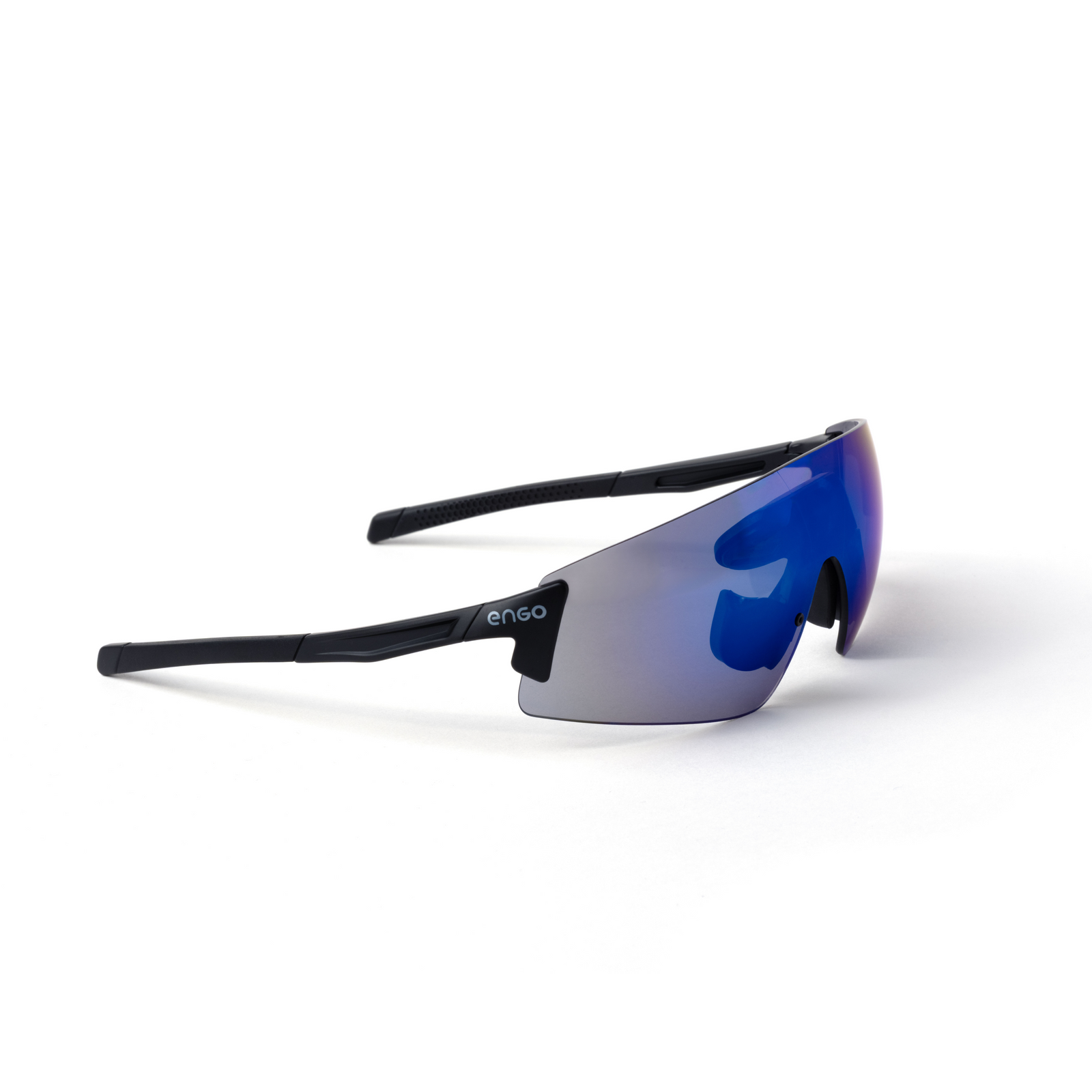
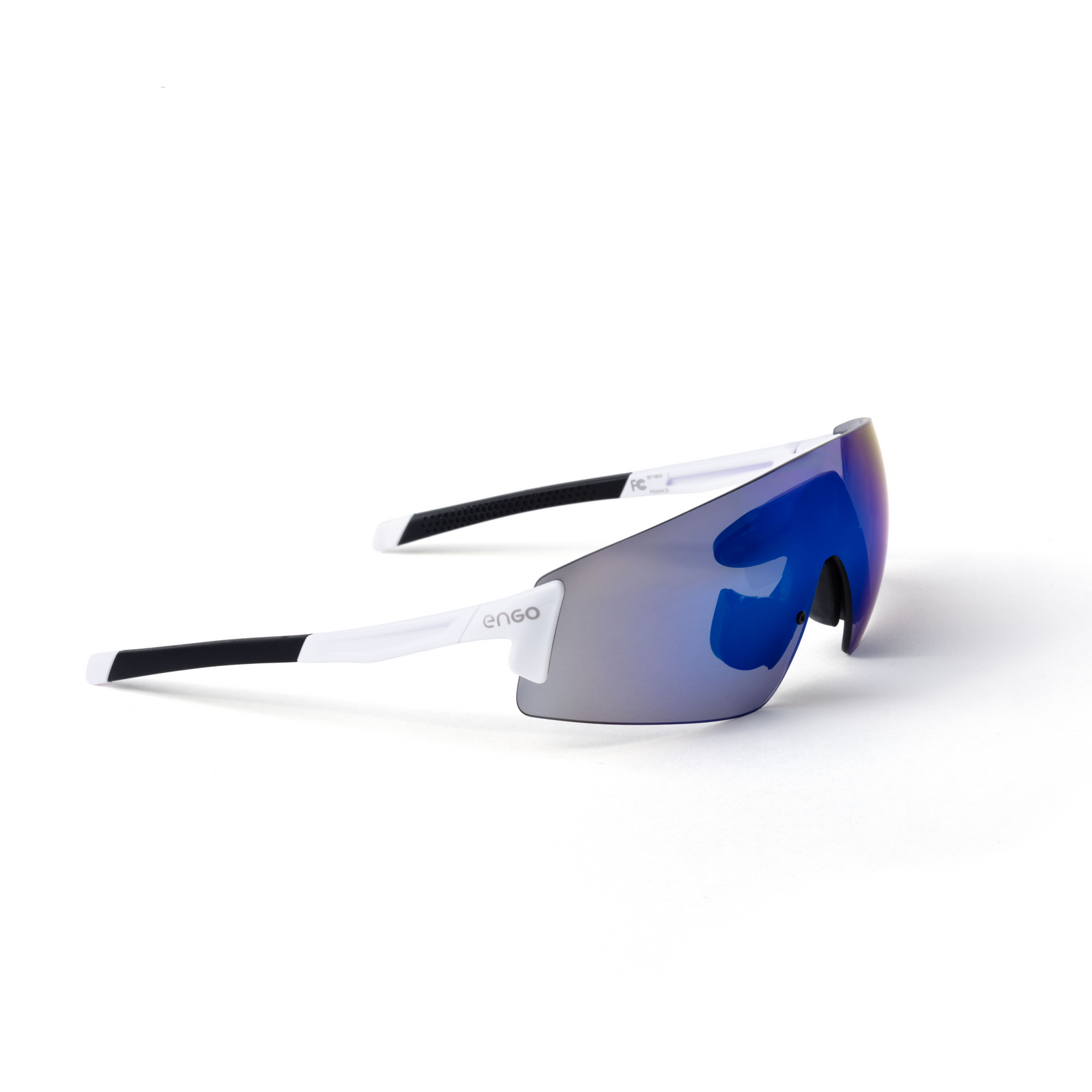
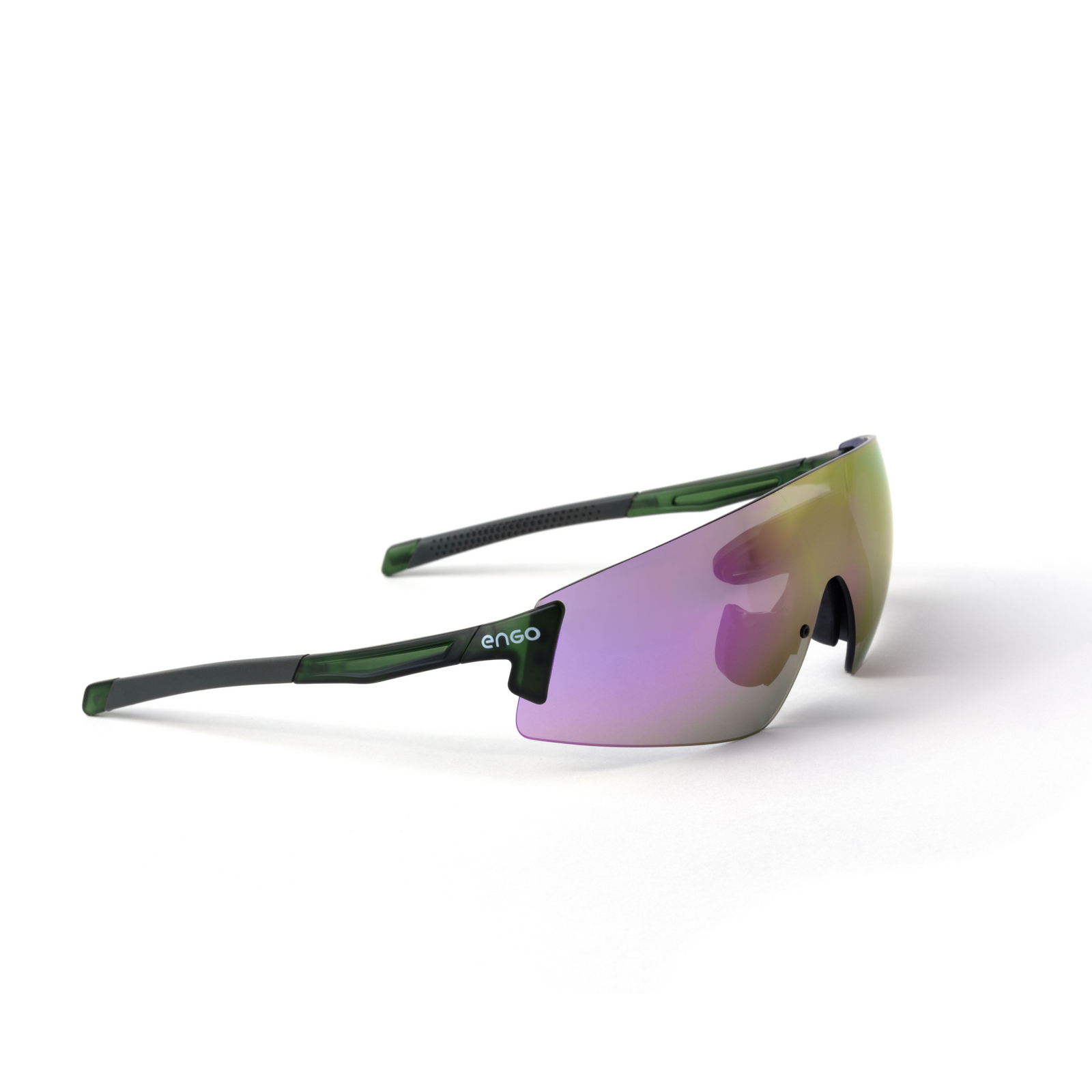
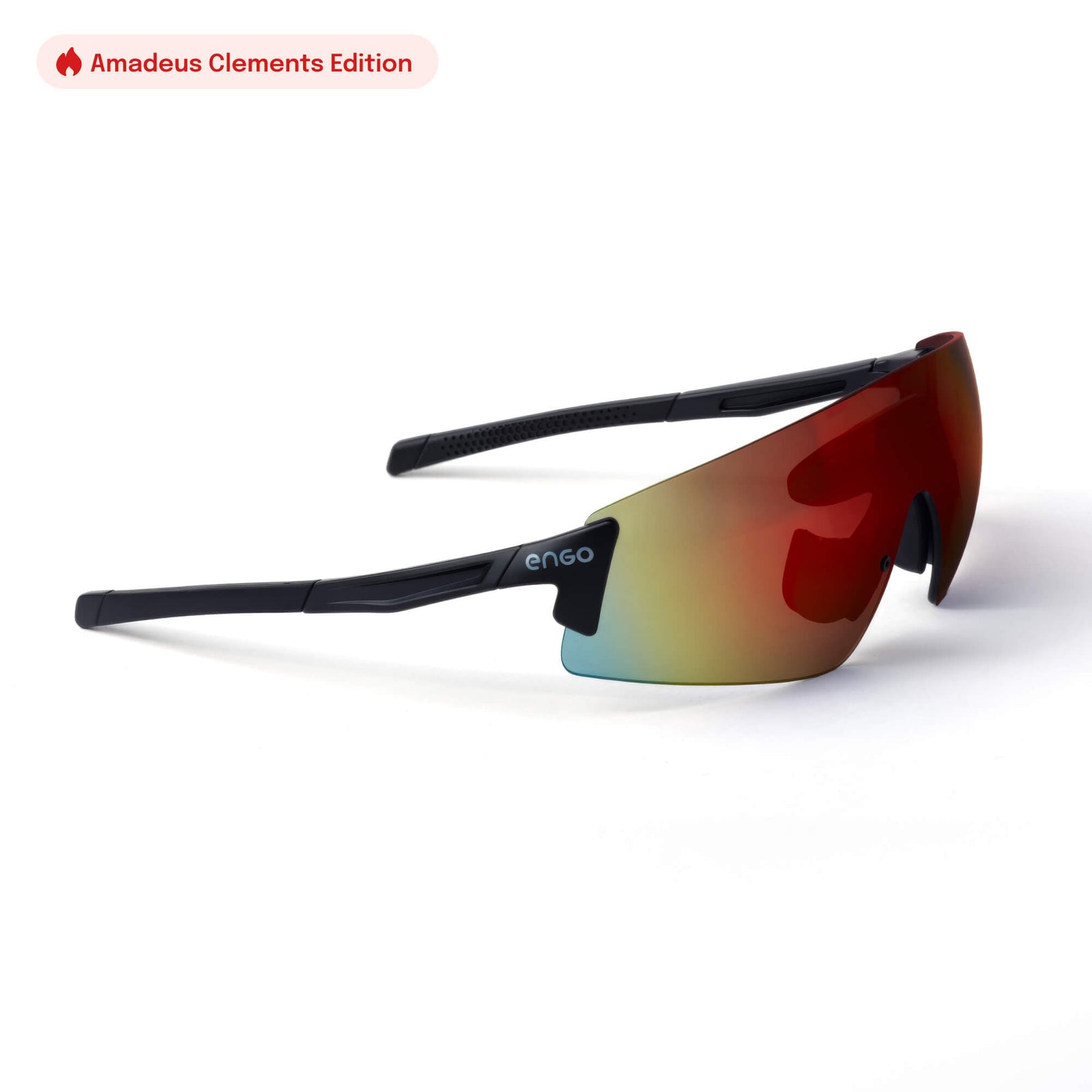
Discover engo3
Everything runners ask, answered.
Will I even notice a difference?
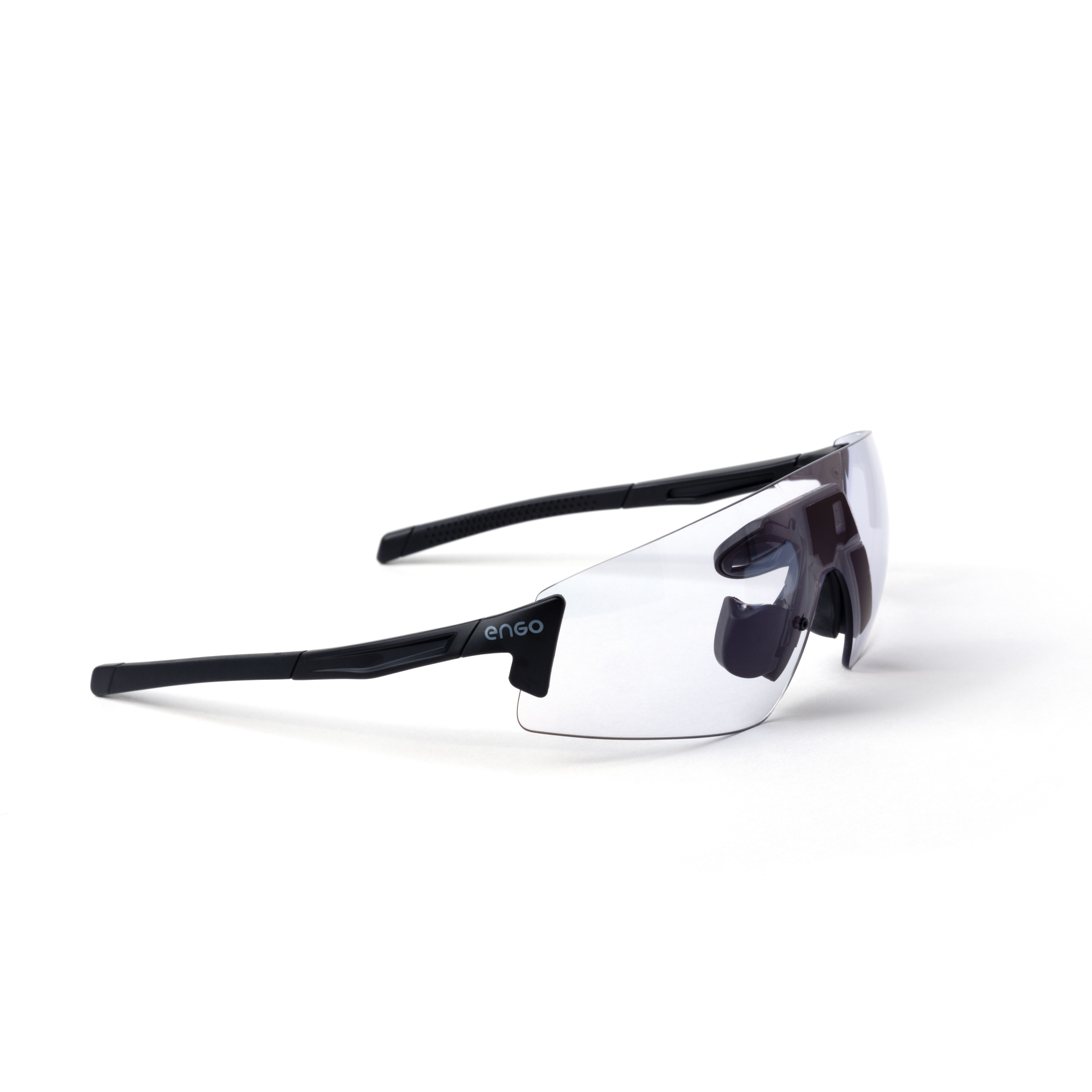
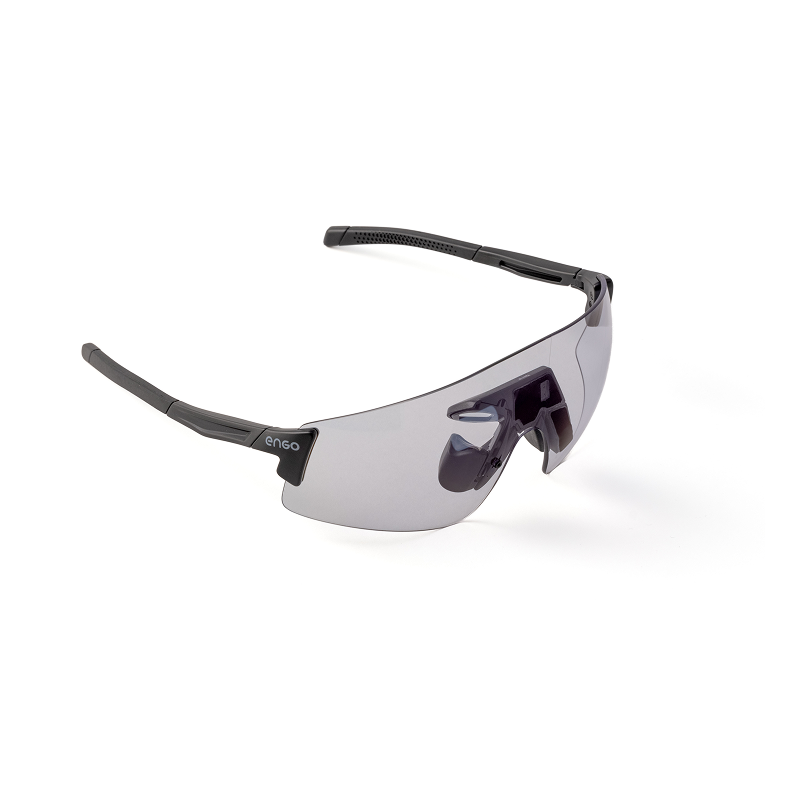
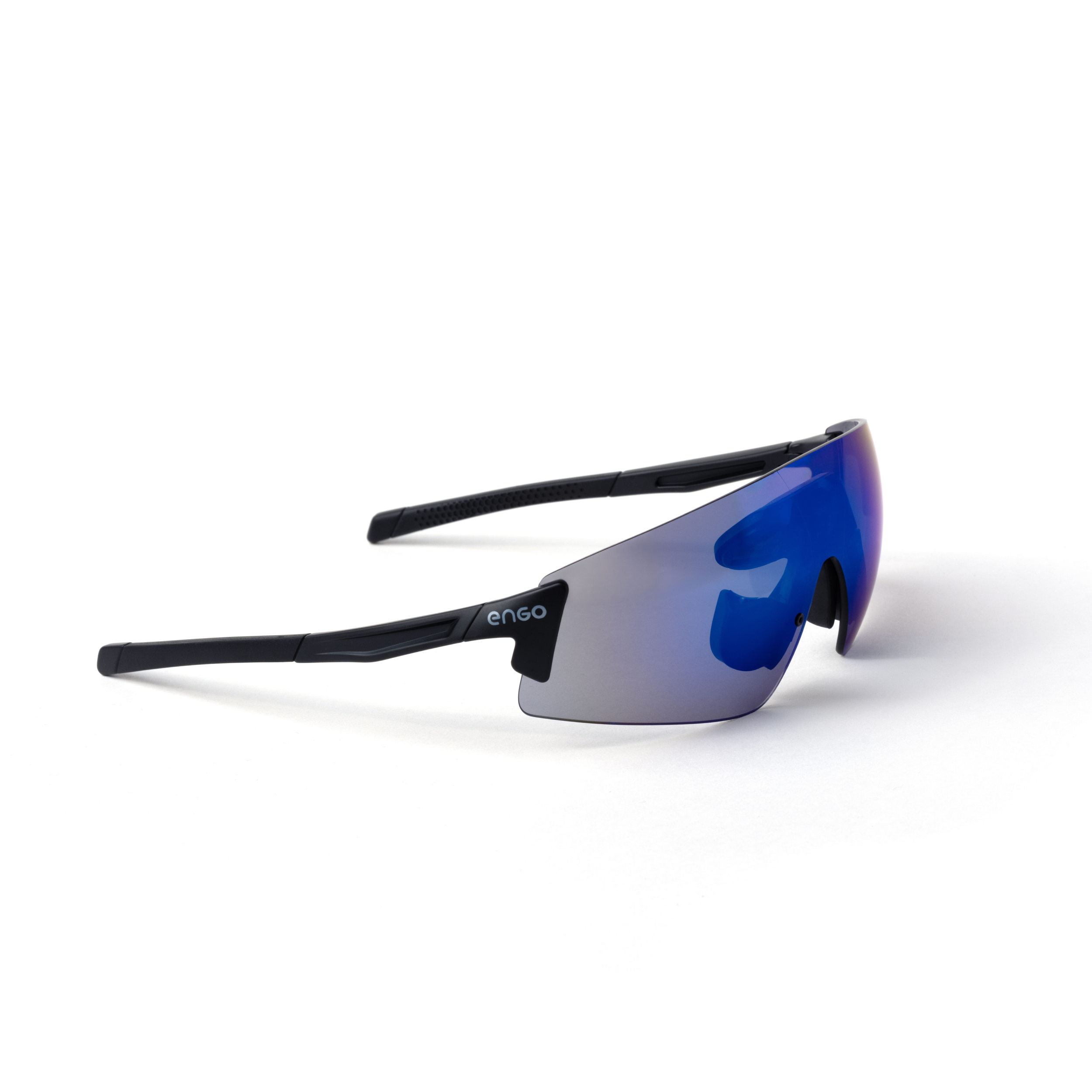
The engo3 uses fixed tinted lenses (category 3), perfect for very sunny conditions. The engo3 Photochromic features photochromic lenses that automatically adapt to light levels (cat. 0 to 3), making it ideal for changing light conditions.
Is engo3 compatible with Garmin?
Yes it is, with over 81+ models of Garmin devices, plus Apple Watch.
How is engo3 different from Meta Oakley Vanguard?
engo3 is a pure performance display built for serious runners and cyclists: a lightweight AR heads-up display (38.5g) that projects your stats (pace, heart rate, cadence, and more) right in your line of sight, with 20+ hours of battery life and no camera, music, or notifications to distract you.
The Oakley Meta Vanguard is a general-purpose smart glasses product with a built-in camera and Meta AI, giving you sport stats through voice commands or audio rather than a visual display, with about 9 hours of battery life. In short: engo3 keeps your eyes on the road and your data always visible, Vanguard is a multitasking device where sport is one feature among many.
How long does the engo3 battery last?
24+hours
Can I use engo3 for trail running or ultras?
Yes!
Does engo3 have a camera?
No, engo3 doesn't have a camera. It's built purely as a data display: no camera, no music, no notifications, just your real-time stats (pace, heart rate, cadence, etc.) projected in your field of view. That's a deliberate choice to keep it light (38.5g) and focused on performance rather than content capture.
What is the weight of engo3?
38.5 gr
Read more articles
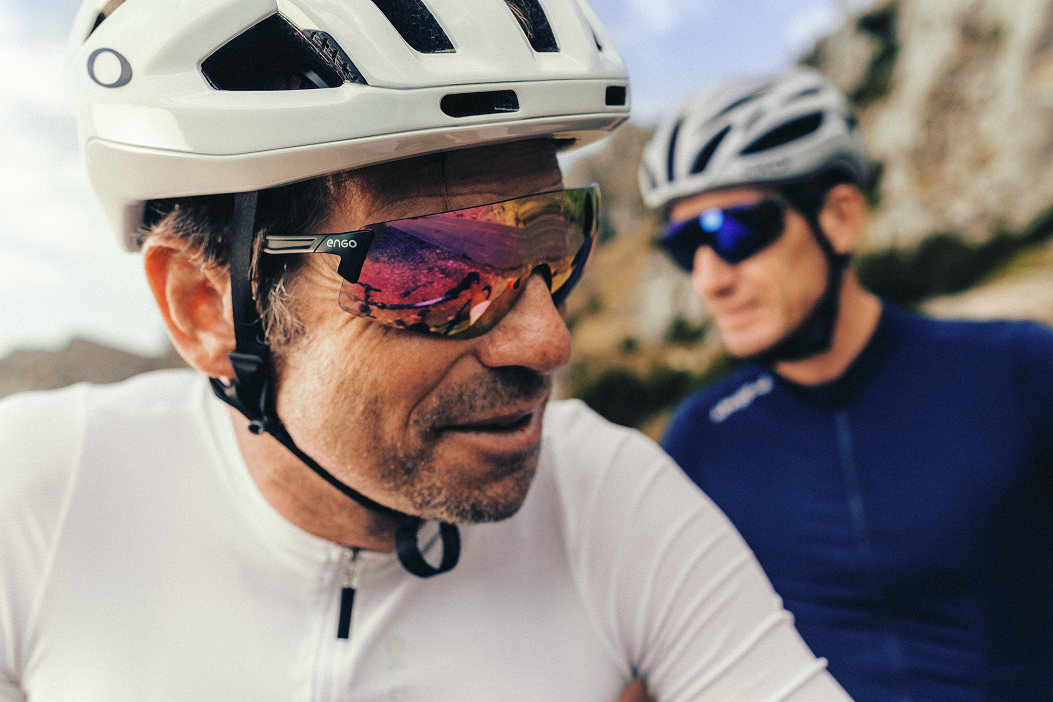
engo3 for cyclists: ride data without looking down
engo3 cyclist connected glasses put pace, power, varia radar and heart rate right in your line of sight, so cyclists never have to look down at a bike computer again.
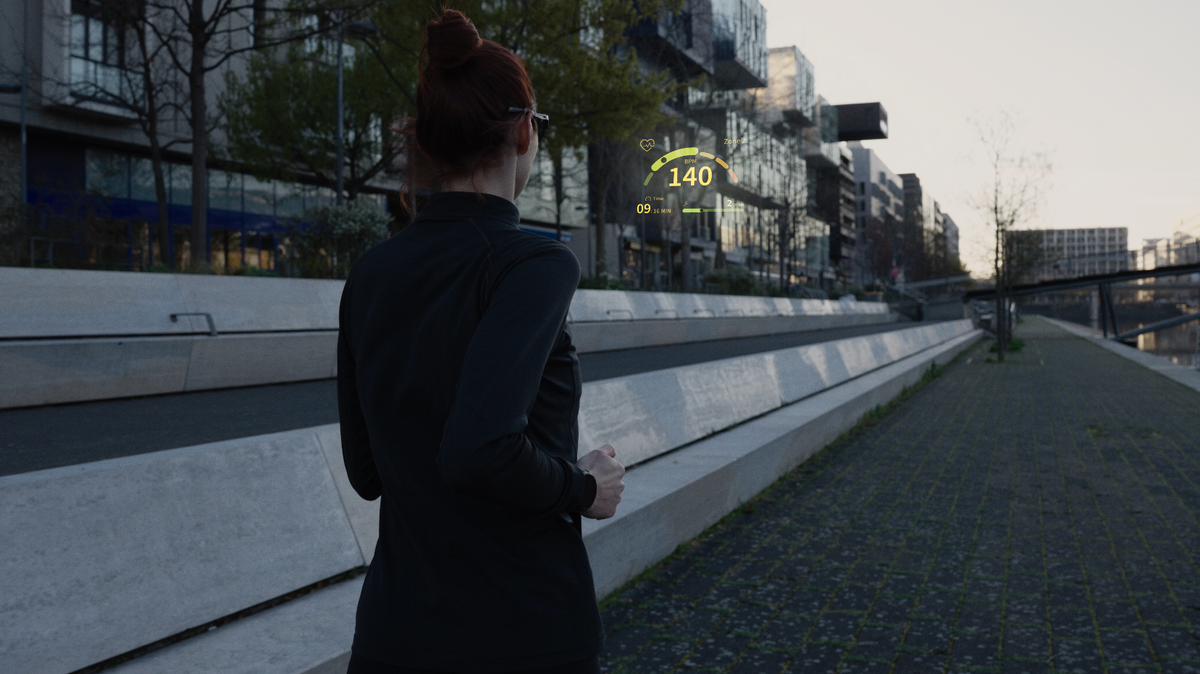
The Marathon Wall: Understanding and Overcoming This Notorious Challenge
The marathon wall isn't a myth, it's a physiological reality that typically strikes between kilometer 30 and 35, when glycogen stores run out and the body is forced to burn fat, a far less efficien...
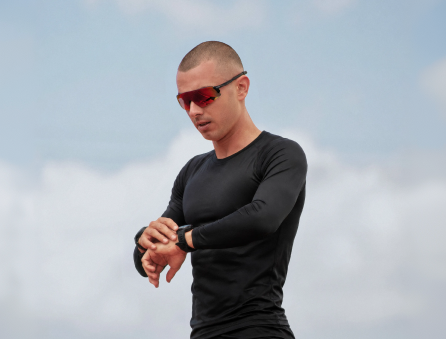
engo3 Kenya: The Limited Edition with Amadeus Clements
Iten, Kenya has produced more world-class marathoners than most countries combined. It's also where the engo3 Kenya was born, not in a design studio, but on the training log of an engo athlete who ...
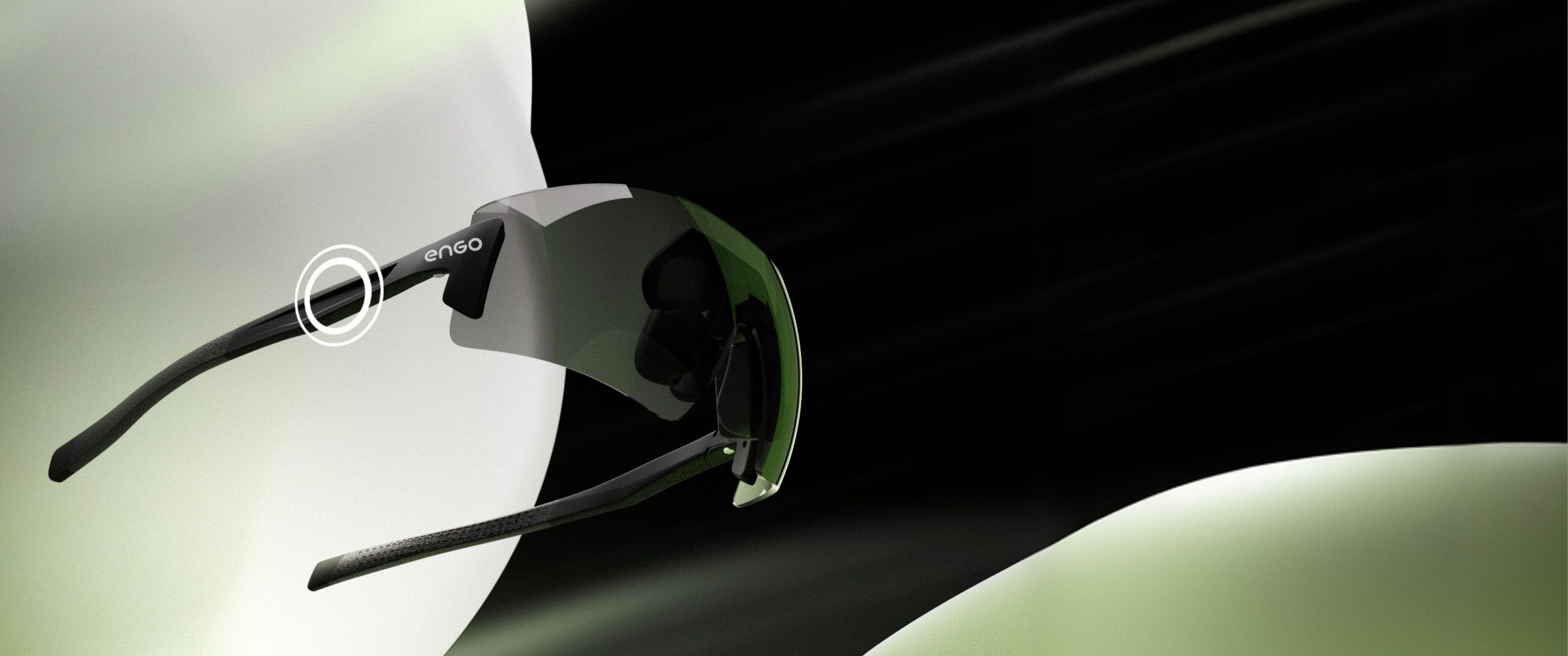

Compatible Devices
Works with most Garmin, Apple Watch, or Suuntos. See the complete list of supported devices and third-party apps that work seamlessly with ENGO.
Check the compatibility of your device
ENGO Care
Your Worry-Free Protection. Scratched lenses? Broken frame? Stolen gear? For one year, we'll replace your ENGO—no hassle, no extra cost. Train hard without worry.
Learn About ENGO Care
Get Started in Minutes
Step-by-step instructions for pairing ENGO with your specific watch model. Clear, simple guidance to get you from unboxing to your first run in under 5 minutes.
Connect ENGO to your device
Returns
Train with ENGO for a full month. If it doesn't transform your running, return it free with our prepaid label. Full refund, no questions asked, no restocking fees.
See Return Process
Questions? We're Here.
Browse our FAQ library, explore detailed setup guides, search our help database, or chat directly with our support team. Real help when you need it.
Visit Support Center